They can learn commands, recognize their names, understand routines, read our emotions, and somehow know exactly when we’re about to open a bag of treats from three rooms away.
And yet, every so often, a dog will completely abandon all of that higher reasoning to sit down and lick its own junk.
Not casually, either. I’m talking about the kind of licking that becomes a full-time occupation. The dog is completely absorbed. You can call its name. You can wave your hand. You can blow a dog whistle and activate their shock collar.
Nothing. It’s busy.
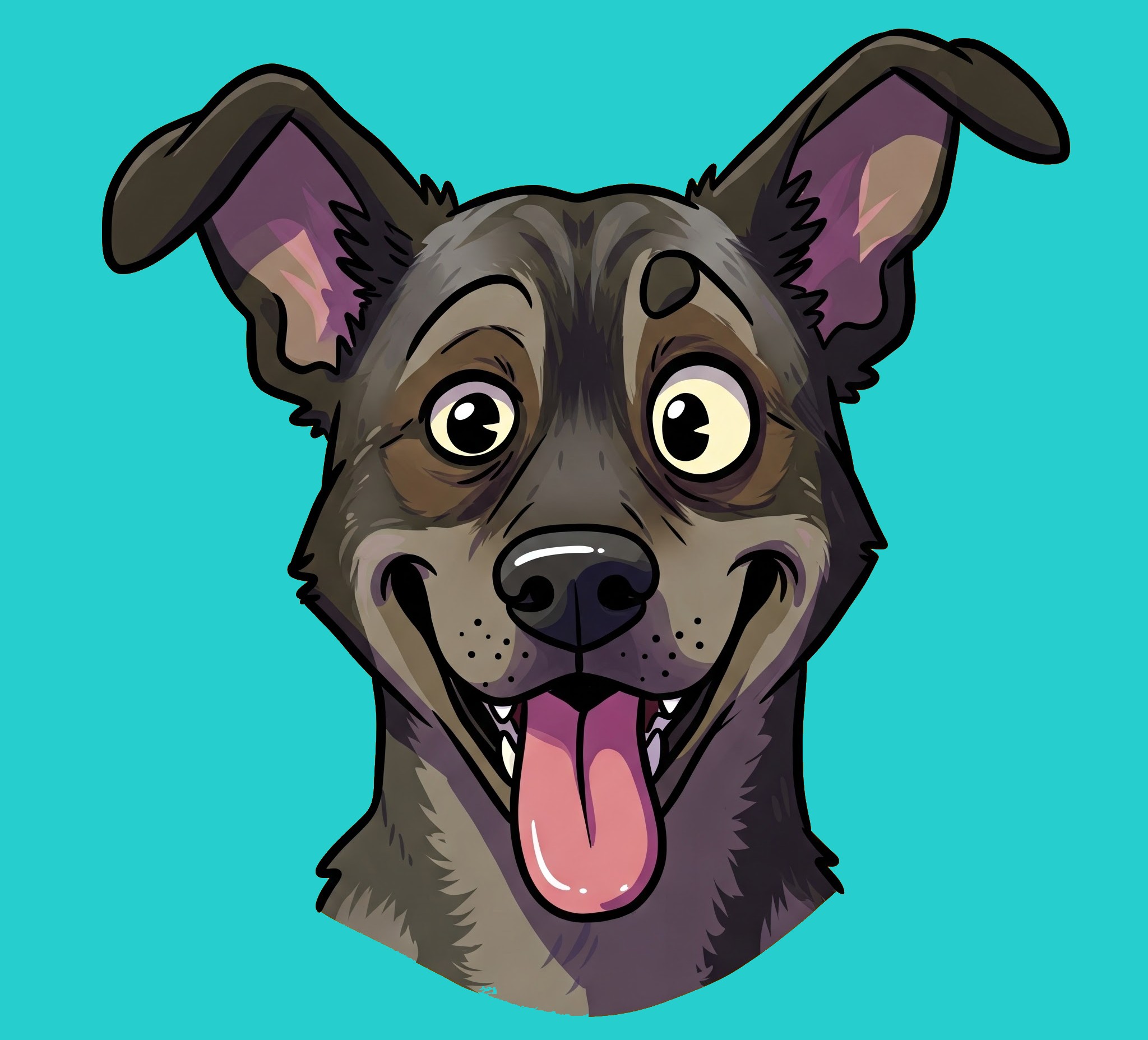
I recently watched a dog become so thoroughly engrossed in this pastime that its owner couldn’t get its attention at all. Eventually, the dog stopped, looked up, and made that face only a dog can make …
One ear half-cocked. Tongue hanging out. Completely vacant expression.
It looked like it was thinking:
“I’m sorry, were you saying something?”
And that’s when I realized there is really only one reasonable explanation for this behavior.
Why do dogs lick their own junk? Because they can.
There’s a particular kind of driver who apparently thinks stop signs are a shared responsibility. You know the type.
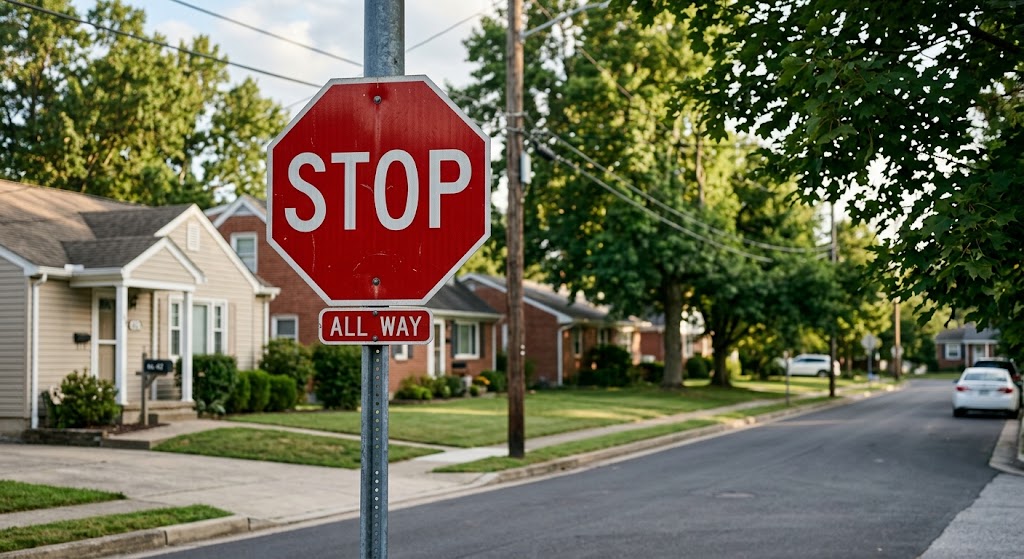
You approach a stop sign, and another vehicle is approaching behind you (or beside you if you’re on a one-way street or a road with multiple lanes moving in the same direction). You do what you’re supposed to do: you come to a complete stop.
Not a rolling stop. Not a “my tires technically stopped moving for approximately 0.4 seconds” stop. An actual, full stop.
And then you notice the car next to you or behind you isn’t stopping.
Oh, it’s slowing down. It’s slowing down just enough to observe what you’re doing. Because apparently, you have just been appointed the group’s designated stopper.
You stop. They see you stop. You begin moving. And they begin moving.
Congratulations. You have just experienced stop adoption.
What Is Stop Adoption?
Stop adoption is what I call it when two vehicles approach a stop sign from the same direction, but only the first vehicle actually stops. The second driver observes the first driver’s compliance with the law and then quietly assumes that compliance extends to them and “adopts” the stop of the first driver.
It’s a beautiful arrangement, really. One driver performs the civic duty of stopping, while the other driver receives all the benefits without having to participate. Think of it as traffic freeloading.
The adoptive stopper doesn’t necessarily blow through the intersection at full speed. That would require a certain amount of commitment. Instead, they slow down enough to maintain plausible deniability. They might even tap the brakes.
“Look! I slowed down!”
Yes. And I appreciate your tremendous sacrifice. But you didn’t stop. You paused long enough for me to stop for you.
The Side-by-Side Variant
Stop adoption becomes particularly infuriating when it happens on a road with multiple lanes traveling in the same direction.
Imagine two cars approaching a stop sign side by side.
You stop.
The other driver does not.
You are now, somehow, responsible for establishing that the intersection is safe for both vehicles. This is especially impressive because the other driver may actually have a better view of the intersection than you do, but that doesn’t matter.
They have chosen to outsource their stop.
And if you happen to proceed through the intersection while they proceed alongside you, you have now participated in a bizarre little trust exercise entirely without your consent.
Why Do People Do This?
I have theories.
The first is convenience. Stopping is apparently just way too much work.
The second is impatience. The driver doesn’t want to lose those precious two or three seconds required to bring the vehicle to a complete stop and then accelerate again.
The third is the deeply American belief that traffic laws are suggestions that apply primarily to other people.
But there is another possibility: ego. Because stop adoption requires the driver to look at another human being who has correctly stopped and think: “Well, if he’s stopping, that’s good enough for me.”
Not: “I should stop too.”
Not: “There’s a stop sign here.”
Not even: “I should probably make sure the intersection is clear myself.”
Instead: “If that guy’s got it, I’ve got it.”
No, Dave.
You have to have it on your own. I am driving a completely separate vehicle.
It’s Not Just Annoying
At first glance, stop adoption seems like one of those minor driving annoyances that belongs in the same category as people who don’t use turn signals or people who leave shopping carts in parking spaces. But it can be genuinely dangerous.
A stop sign exists because drivers approaching an intersection need to halt and determine who has the right of way. A driver who simply follows the vehicle ahead without independently stopping is relying on someone else’s behavior to make their own decision. That’s a terrible system.
What if the first driver stops but doesn’t proceed because they see a pedestrian?
What if a cyclist is crossing?
What if another vehicle is approaching from a direction the adoptive stopper can’t see?
What if the first driver is turning and the second driver assumes they’re going straight?
What if the first driver stops for some reason that has absolutely nothing to do with the intersection?
There is no magical transfer of legal compliance between vehicles. My stop does not become your stop merely because you decided to adopt it.
The Fundamental Problem
The fundamental problem with stop adoption is that the adoptive stopper isn’t actually driving independently. They’re using the vehicle in front of them as a traffic probe.
You go first.
You make sure it’s safe.
You establish that nobody is coming.
You deal with the stop sign.
I’ll just follow you.
This is particularly obnoxious because it shifts risk from the person making the decision to the person who has already done the responsible thing.
Yet you’re now expected to trust that they will interpret the intersection correctly. That’s not how traffic is supposed to work.
A Modest Proposal
I don’t think we need a massive government initiative, a federal task force, billboard announcements, or even a twelve-part documentary series narrated by Morgan Freeman.
We simply need every driver to understand one basic principle: Your stop is your stop.
If there is a stop sign, stop.
If the vehicle next to you stops, that doesn’t mean you’ve stopped.
If the vehicle in front of you stops, that doesn’t mean you’ve stopped.
If your neighbor three blocks away stops, that definitely doesn’t mean you’ve stopped.
Bring your own vehicle to a complete stop. Look. Assess the intersection. Then proceed when it is safe and lawful to do so.
It’s not complicated.
And if you’re behind me at a stop sign, please understand that my stop is not up for adoption.
It doesn’t know you.
It doesn’t want you.
And I certainly don’t want to be responsible for whatever you’re doing with your brake pedal.
Something got me thinking about trees the other day. Oak trees and elm trees, pines and poplars, magnolias and willows. Here in North Louisiana, we also have abundant peach and pecan orchards.
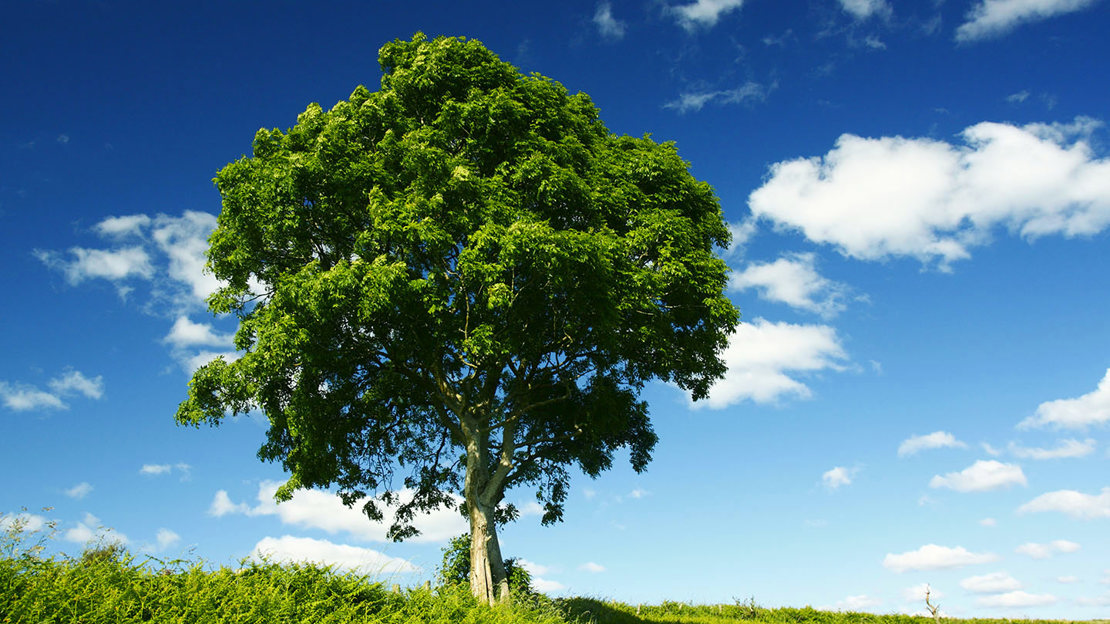
Then the ash tree popped into my head. Ash trees are robust, hardy trees, certainly. But where did the name come from? It’s as if whoever named it decided to call it by the moniker of what’s left behind when you destroy it.
I can’t think of any other objects named in that way. Wouldn’t that equate to naming vehicles things like a “Ford Crash” or a “Dodge Wreck”?
What about toiletries, like “Poo Smear Toilet Tissue” or “Dirty Spit Toothpaste”?
It’s hard to imagine the thought process that went into naming the ash tree, unless, perhaps that was the first kind of tree humans ever witnessed burning.
Turns out, this is all based on a false premise.
The Old English word for the tree was æsc. The Old English word for the stuff left after a fire was asce. They were completely different words that somehow arrived in modern English wearing the same outfit.
Æsc did also come to mean “spear,” because ash wood was particularly good for making spear shafts. So there is a perfectly logical lexicographic explanation for all of this.
Which is disappointing.
I still prefer to believe somebody looked at the first burned-up tree and said, “Well, I guess we know what to call those now.”
Next Arbor Day, I think I’ll drive out and plant an ash tree in my Chevy Scrapper.